After Hours, Before Renewal: The Unofficial Channels That Rescue Publisher Deals

The renewal email had been sitting unanswered for eleven days. Pricing was disputed, the Q4 flight was misaligned, and both sides had retreated into the kind of polished, defensive language that signals a partnership is circling the drain.
Then, at 10:40 p.m. on a Tuesday, the media buyer at a Chicago-based DTC brand sent a two-line text to the publisher's sales director: "This is getting dumber by the email. Can we just talk tomorrow?"
They talked. No deck, no procurement rep, no legal reviewer on the thread. Forty-five minutes later, the framework for a renewed deal existed—and the contract followed it within two weeks.
Stories like this surface constantly when you ask American media buyers how renewals actually get done. The formal process gets the signature. The informal process gets the deal.
The Stalled Middle of Every Renewal
Renewal negotiations follow a predictable arc. The opening is cordial—performance recaps, optimistic roadmaps, mutual flattery. The end is administrative—signatures, IOs, kickoff calls. It's the middle that kills partnerships.
The middle is where pricing disagreements harden into positions. Where a publisher's new rate card collides with a brand's flattened budget. Where internal stakeholders who were never part of the original relationship suddenly have opinions, and every exchange gets cc'd to one more person.
"By the third escalation email, nobody is solving the problem anymore," says a media buying lead at a Midwest retail brand who asked not to be named, citing ongoing vendor relationships. "Everyone is documenting it. Those are different activities."
Documentation has its place. But deals rarely revive inside a documented dispute. They revive when two people who trust each other drop the armor for fifteen minutes.
Where the Real Negotiations Happen
Ask ten buyers where rescued renewals actually turned, and you'll hear a remarkably consistent list:
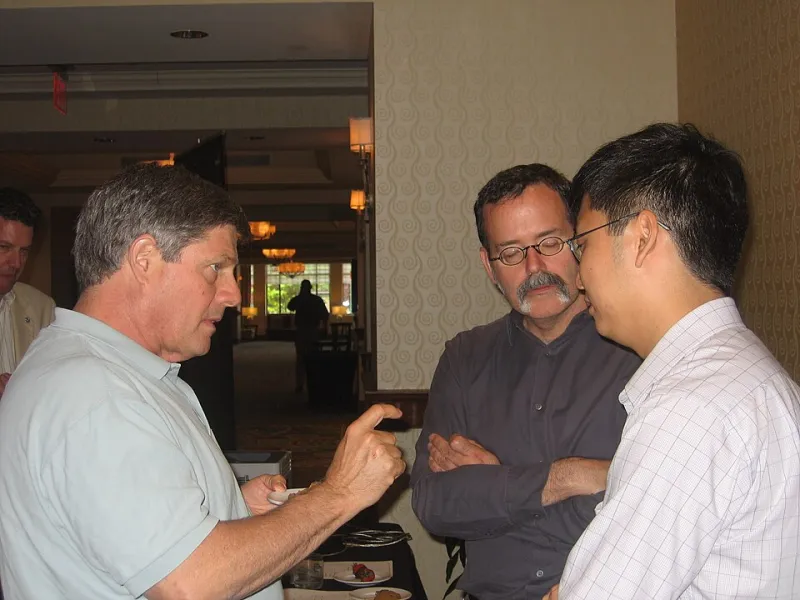
- The conference hallway. Not the panel, not the sponsored happy hour—the unplanned conversation outside the ballroom where someone says the quiet part out loud: "Look, our CFO is never going to accept that number, but here's what she will accept."
- The late-evening phone call. After business hours, when neither party is performing for an audience and both can speak candidly about constraints.
- The quick text between known counterparts. Informal, direct, and—critically—bilateral. Nobody forwards a text thread to procurement.
- The airport rideshare debrief. Post-conference, tired, honest. A surprising number of stalled deals find their footing somewhere between a convention center and a departure terminal.
A publisher sales director on the West Coast describes it bluntly: "The contract tells you what happens when things go wrong. The relationship tells you whether things go wrong. Buyers who only invest in the contract are insuring a house they never built."
Relationship Capital, Defined
The phrase gets thrown around, but it has a workable definition: relationship capital is the accumulated trust that lets two parties exchange inconvenient truths without triggering a defensive response.
It's built long before renewal season. It's built when a buyer flags an underperforming placement early instead of hiding it until the QBR. It's built when a publisher proactively makes up a missed impression guarantee without being asked. Every small act of candor deposits into an account both sides can draw on when the negotiation gets hard.
The 2 a.m. dynamic isn't about the hour—it's about the absence of audience. Formal channels reward positioning. Informal channels reward honesty. Renewals stall when positioning wins; they close when honesty does.
Building the Channel Deliberately—Without Getting Sloppy
None of this is an argument for improvisation or blurred professional lines. The buyers who benefit most from informal channels built them intentionally, and within boundaries:
Identify your counterpart early. From the first campaign, know the named human on the other side—not the sales@ alias. Route good news and bad news through that person consistently.
Match the medium to the moment. A text is fine for "can we hop on a call?" It is not fine for pricing terms. Anything that constitutes an offer, concession, or commitment belongs in writing, reviewed by the people paid to review it. Informal channels move the conversation; formal channels ratify it.
Respect the hour, not just the channel. The point of off-hours candor is reduced pressure, not reduced professionalism. A 9 p.m. call between two counterparts who've known each other for years reads differently from a midnight message to a new contact. When in doubt, schedule the early-morning call instead.
Keep your stakeholders warm. The most common failure mode is a private understanding between two individuals that never survives contact with procurement or finance. Bring your internal skeptics into the relationship—invite them to the conference, introduce them to the publisher's team. Trust that lives in one person's phone is fragile. Trust that lives across two organizations compounds.
What Ad Platforms Can Learn
There's a structural lesson here for anyone building tools in this space, including platforms like ours that sit between marketers and publishers. Workflows, scorecards, and proposal software make the formal channel faster and more transparent—and that's genuinely valuable. But no dashboard replaces the candid fifteen-minute call that unsticks a renewal.
The best operations teams design for both: systems that handle documentation and rhythm, and deliberately preserved human channels that handle the moments systems can't. If your renewal process is entirely email-mediated, you haven't built a process. You've built a paper trail with a countdown timer.
The deal that closed after that late-night text? It renewed for a second year, at better terms than either side originally expected. The clause that saved it was never in the contract. It was in the two-line message that came first.