Five Days, Forty-Seven Pitches: What Actually Survived a Publisher's Inbox
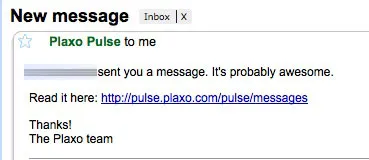
Photo: cogdogblog, CC0, via Wikimedia Commons
Every marketer pitching a publisher believes their email is different. From the sending side, it is. From the receiving side, it is the forty-seventh email of the week asking for 'a quick chat about a partnership opportunity.'
To understand what actually happens after you hit send, we worked with a publisher at a mid-size US lifestyle and news outlet—one of the thousands of independent sites that marketers increasingly want on their media plans. With identifying details scrubbed, we mapped five business days of unsolicited inbound: 47 pitches total. Thirteen got a reply. Nine got opened and read but never answered. Twenty-five were deleted, most within thirty seconds.
What follows is that week, annotated. Not to embarrass anyone—but because the failure patterns are so consistent they amount to a playbook in reverse.
Monday: The Subject Line Is the Whole Ballgame
Monday's inbox held eleven pitches. Three earned replies, and all three shared a trait: the subject line named the publisher's property and something specific about it.
- "Q4 sponsorship idea for your Sunday newsletter (42k subs, I checked)" — replied
- "Partnership opportunity" — deleted
- "Quick question re: your holiday gift guide coverage" — replied
The publisher's comment, paraphrased: "If the subject line could be sent to any site on earth, it's dead on arrival. I run six newsletters. Tell me which one you actually read."
That's the first annotation worth underlining. Personalization is not "Hi [First Name]" mail-merged onto a template. It is proof, in the first seven words, that the sender knows which asset they're buying.
Tuesday: The 90-Second Window
Tuesday brought nine pitches. The publisher told us she triages inbound in two passes: a morning scan on her phone, roughly ninety seconds per email, and a second pass at day's end for anything that survived.
What killed pitches in the scan phase wasn't lack of polish—it was length and self-orientation. Openers that led with the sender's agency, its award-winning campaigns, or its "proprietary audience intelligence" rarely made it to pass two. Openers that led with the publisher's audience, a recent story, or a concrete ask did.
One email opened: "Your October piece on local election coverage pulled serious engagement in our client's demo—here's a sponsorship idea built around it." That got a same-day reply. Not because the flattery worked, but because the sender had done the publisher's homework for her: relevance, evidence, and a next step in three sentences.
Wednesday: Attachments, Decks, and Other Deal-Breakers
Wednesday's six pitches included four with attachments—a 9MB PDF deck, a media kit, a rate proposal, and a "brief overview" that turned out to be a 22-slide presentation.
All four were deleted unopened. The publisher's reasoning was practical, not rude: unsolicited attachments from unknown senders are a security risk, they clog mobile inboxes, and they signal that the sender wants to present rather than converse.
The pitches that survived Wednesday were plain-text, under 150 words, and ended with a single, low-friction question. The winning closer wasn't "Do you have 30 minutes to hop on a call?" It was: "Would your team be open to seeing two placement concepts for the holiday guide—no deck, just the idea?"
Thursday: Timing Is a Strategy, Not a Coincidence
Of the week's replies, none came from pitches sent Thursday afternoon or Friday. The surviving sends clustered Tuesday and Wednesday mornings, local to the publisher's time zone.
This tracks with what the publisher described as her real workflow: Monday is editorial planning, Thursday is production, Friday is wrap-up. Inbound partnership email gets attention in the Tuesday–Wednesday trough, when the news cycle pauses and the inbox is catchable.
Marketers sequencing outreach around their own sprint calendars—end-of-quarter pushes, Monday morning blasts—are scheduling their pitches into the publisher's busiest hours. The fix is trivial: ask when, or observe when the publisher is most active publicly (new posts, newsletter sends) and reach out adjacent to those moments.
Friday: What the Thirteen Replies Had in Common
By Friday, we could sort the entire week. The thirteen replies shared four characteristics, none of which required budget, connections, or gimmicks:
- A named asset. The pitch identified the specific newsletter, vertical, or format—not "your platform."
- Evidence of familiarity. One concrete reference to recent editorial work. One is enough.
- A scoped ask. A placement concept, a season, a format—not "a conversation about synergies."
- Respect for the reader's time. Under 150 words, no attachment, one question.
Notably, the two most elaborate pitches of the week—personalized video messages, one with a custom landing page—received no reply at all. The publisher's verdict: "Impressive, but I don't know what they're selling. Effort isn't the same as clarity."
The Masterclass, Condensed
The lesson from forty-seven pitches isn't that publishers are gatekeepers to be gamed. It's that the inbox is a filtering system, and the filter is calibrated to one question: does this sender understand my business?
Everything that earned a reply answered yes within seconds. Everything else—regardless of budget behind it or agency pedigree—answered no, or answered nothing at all.
For marketers building publisher pipelines through platforms like AdPropo, the takeaway is to move the personalization upstream. Do the targeting homework before the first email, not inside it. Arrive with a named asset, a scoped concept, and evidence you've read the room. The pitch that survives isn't the loudest one in the inbox. It's the one that reads like it was written by someone who already knows the answer to "which newsletter?"
That's not a trick. That's just the beginning of a partnership—and publishers, as this week made plain, can tell the difference instantly.